
20 years of Warren's fxphd Resolve color training.
In 2006, a Brisbane colorist who'd never been to college became fxphd's professor of color. This year he released Warren's Resolve Color Bootcamp.
By Warren Eagles
I started using DaVinci Resolve in 2005. It cost more than US$300,000, the hardware rack was the size of a doorway, and it took a Resolve engineer two days to install. Later that year I met Mike Seymour and John Montgomery from fxphd. They told me they were opening an online university and asked if I'd like to be their professor of color. Professor! I hadn't even been to college! I didn't know much about what the job would involve, but I like trying new things, so I said yes.
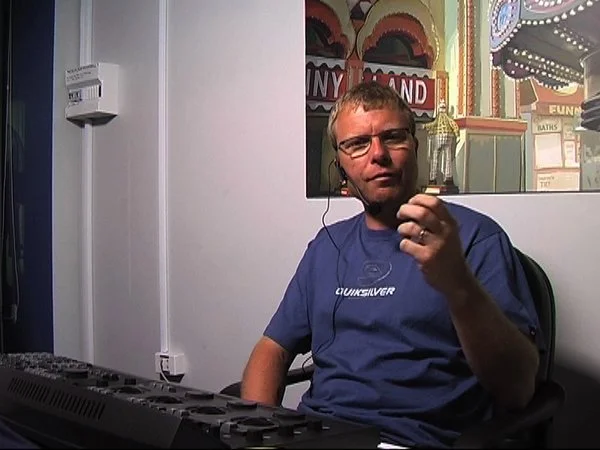
The first Resolve shoot in 2006
My first classes came out in 2006 and were among the first courses fxphd offered: a 30-minute tutorial film each week over a 10-week term. We ran the class on a daVinci 2K color corrector. fxphd didn't own one, so we begged and borrowed time from post houses around Sydney. Grading rooms cost more than $1,000 an hour back then, so we had to get in and out quickly, and sometimes we only managed to shoot two lessons during a facility's downtime. By the time we'd used up most of our favors with Australian post houses, we were lucky enough to get a $300,000 Resolve Linux demo system from daVinci in Singapore, which let us mix things up and record five lessons on Resolve.
I didn't have a $300,000 system of my own, so I did most of my preparation on paper and then had a few minutes before each recording to rehearse the lesson. We didn't want the classes to be a simple screen recording with a voiceover, so we edited together footage from several cameras, the screen and the grading monitor. The first class was more of an introduction, where I talked with some of my director of photography (DP) clients about how colorists and DPs work together. That relaxed feel, along with some background on what a colorist does, set the tone for the rest of the course. When I teach, I explain why you'd use a technique, so students understand the reasoning behind each step instead of just copying what I do.
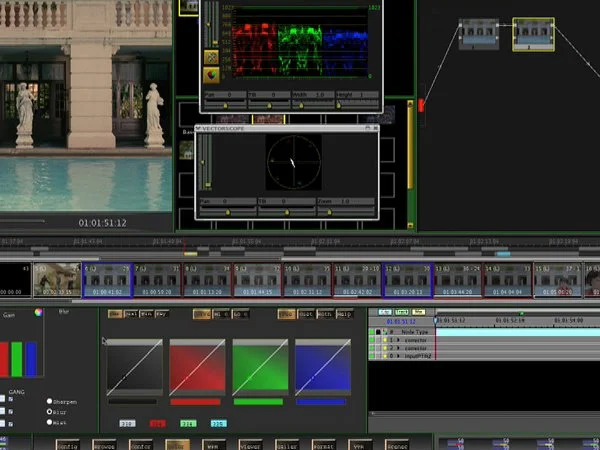
The Resolve 6 GUI in 2006
These were the first high-end color correction classes available online. There was no International Colorist Academy then and no classroom training, so there was a lot of interest. The only problem was that very few students had access to a daVinci 2K or Resolve to practice on. Most of them used Apple Color, After Effects, Avid or Final Cut Pro and were looking for general tips.
When the first Blackmagic Design Resolve came out in September 2010, my classes moved to fxphd's Fast Forward section, where students could download all ten 30-minute lessons at once and work on whichever sections they needed. For Resolve 14 in 2013, I recorded three separate courses (Fundamentals, Advanced and Looks), each with class media so students could follow along with me. fxphd has always cared about production values, so we dressed the set, used good demo material and shot on RED or Sony cameras.
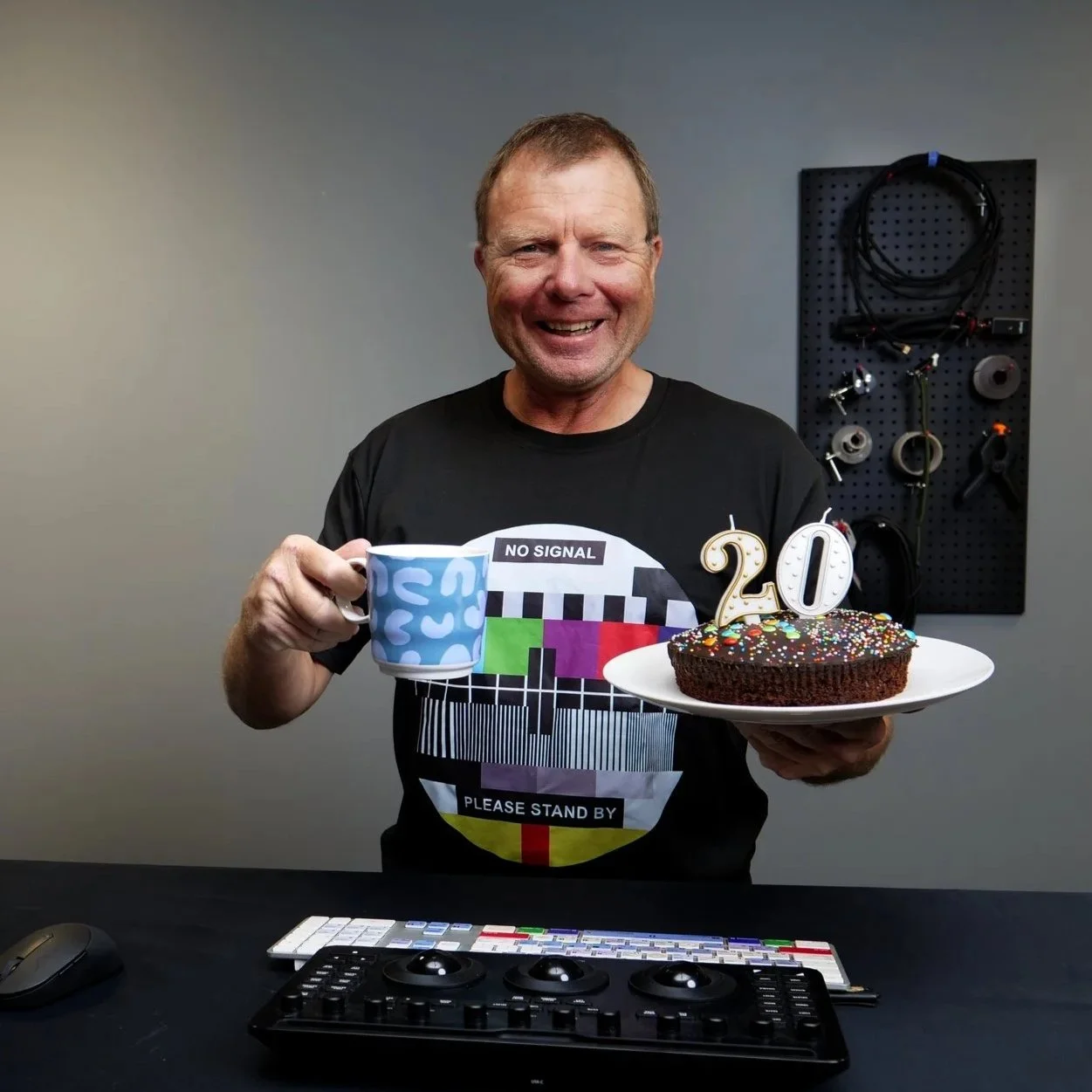
Happy 20th birthday on the Bootcamp shoot in 2026
This year, 20 years after those first lessons, we have released Warren's Resolve Color Bootcamp. The bundle has 50 linked lessons, updated for Resolve 21, and is aimed at editors and content creators who are new to grading in Resolve. After the beginner lessons, the course moves through advanced techniques and then recreates well-known looks and styles. The bundle also includes four pressure-test sequences, where students grade and upload for feedback from me. They also get 100 film and TV Scratch FX clips to use with their projects.
The grading industry has changed a lot in 20 years, but I like to think my teaching style hasn't. I still keep things clear and simple, and I aim to give students enough confidence to grade their own projects.